
School Readiness
for Pre-Schoolers
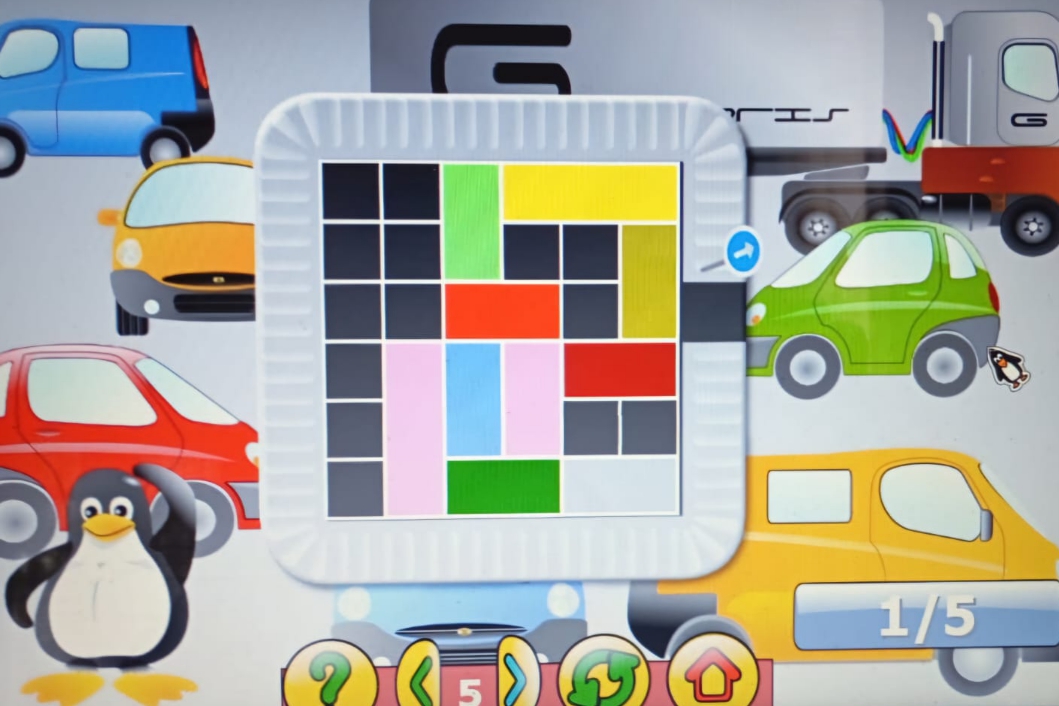
The ability to interpret and make sense of sensory information from the environment.
These skills involve recognizing patterns, shapes, colors, sounds and objects and understanding how they relate to each other.
For children perceptual skills help with tasks like reading, recognizing shapes and letters and understanding spatial relationships, all of which are crucial for learning and development.
We focus on perception, school readiness, memory, fine motor skills, concentration and creativity.
Child development for young learners (ages 3 to 6) goes beyond simple learning
It integrates multiple key areas of development:
1. Cognitive Development
- Includes:
– Perception: The ability to observe and interpret the world.
– Memory: Storing and recalling information.
– Logic: Reasoning and problem-solving skills.
2. Mathematical Skills
- Early numeracy, counting, recognizing patterns, understanding quantities.
3. Language Development
- Expanding vocabulary, sentence formation, understanding and expressing thoughts.
4. Spatial Orientation
- Understanding directions, positions ( like above, below ) and space in relation to self and others.
5. Emotional Development
- Identifying and managing emotions, developing empathy, building relationships.
6. Motor Development
- Hand-eye co-ordination: The ability to co-ordinate visual input with hand movements, such as catching a ball, threading beads or drawing shapes.
- Laterality: Understanding the difference between left and right and developing a dominant hand for tasks like writing or throwing.
- Directional awareness: Recognizing spatial concepts such as up/down, left/right, forward/backward, which supports reading, writing and physical movement in space.
7. Creativity
- The ability to imaginatively create something original. Imaginative ideas. Fantasy play occurs. Create something original.